



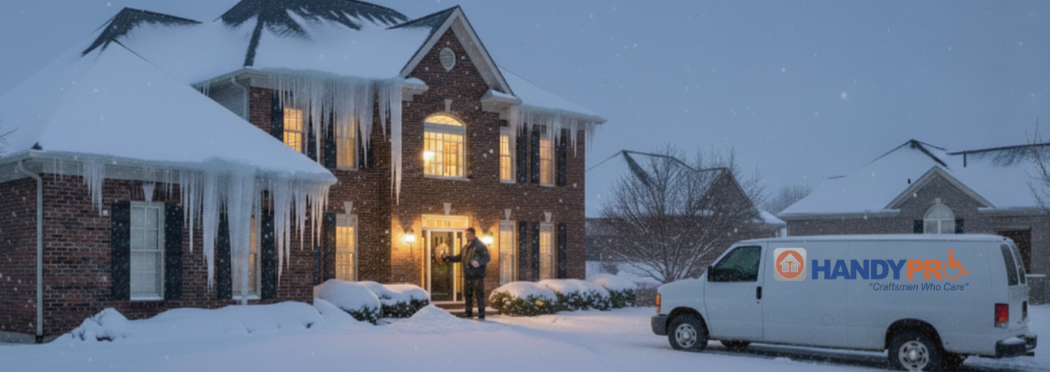
How to avoid your roof's ice dams.
It looks like a postcard outside, doesn’t it? While you’re sitting by the fire watching the flakes blanket the trees in quiet white, a silent, heavy battle is being waged right above your head.
That snow isn't just pretty—it’s weight and moisture. If the temperature swings just right, it can quickly become an expensive guest in your living room. Understanding how winter weather affects your roof is the first step in protecting your peace of mind.
The Anatomy of an Ice Dam
When melting snow runs down a roof and hits cold eaves, it freezes solid, creating a "dam." Behind that dam sits a growing reservoir of water. Because the water is trapped, it often finds the path of least resistance: underneath your shingles and into your home.
Repair and Mitigation: Clearing the Path
When ice dams form, the goal is to create a channel for trapped water to escape before it seeps under your shingles.
- Snow Removal: You can safely clear fresh snow with a roof rake, but avoid scraping the shingles directly to prevent damage to the granules.
- The "Stocking" Trick: For existing ice, many homeowners use calcium chloride. A common trick is to fill a nylon stocking with the crystals and lay it vertically across the dam. This melts a vertical drainage path, allowing trapped water to flow off the roof.
- A Warning on Salt: Avoid using sodium chloride (rock salt). It is highly corrosive to gutters and can severely burn your lawn and landscaping when the snow eventually melts.
Is Calcium Chloride Better for Pets?
While calcium chloride is more effective in extreme cold than sodium chloride, it is not necessarily "pet-safe."
- The Risks: It can still cause chemical burns on paw pads and lead to severe mouth or stomach irritation if a pet licks their paws or eats the melting slush.
- The Better Alternative: If you are worried about pets or your grass, look for products containing Magnesium Chloride or CMA (Calcium Magnesium Acetate). These are generally considered the "pet-friendly" options because they are less abrasive and less toxic, though no chemical de-icer is 100% risk-free.
Safety First: Why DIY is a Risk
For our Silver & Gold seniors, safety is the absolute priority. Icy ground and ladders are a dangerous combination, and DIY roof raking is a common cause of winter injuries. Even for our Professional Pride neighbors who are used to handling things themselves, a long aluminum rake can be a hazard near power lines. Professional mitigation allows the risk to be managed from the ground while you stay warm inside.
The "Red Flags" Inside Your Home
Sometimes the battle is already being lost. Look for these "silent alarms" in your hallways and at the corners of your ceilings:
- Faint yellow or brown stains.
- Paint that appears to be "bubbling."
- Soggy insulation making a room feel suddenly drafty.
Catching these signs early can be the difference between a simple fix and a major restoration project.
Navigating your home doesn’t have to be a solo effort. Our team at HandyPro is ready to partner with you to repair and improve your home's needs.
.jpg)

