



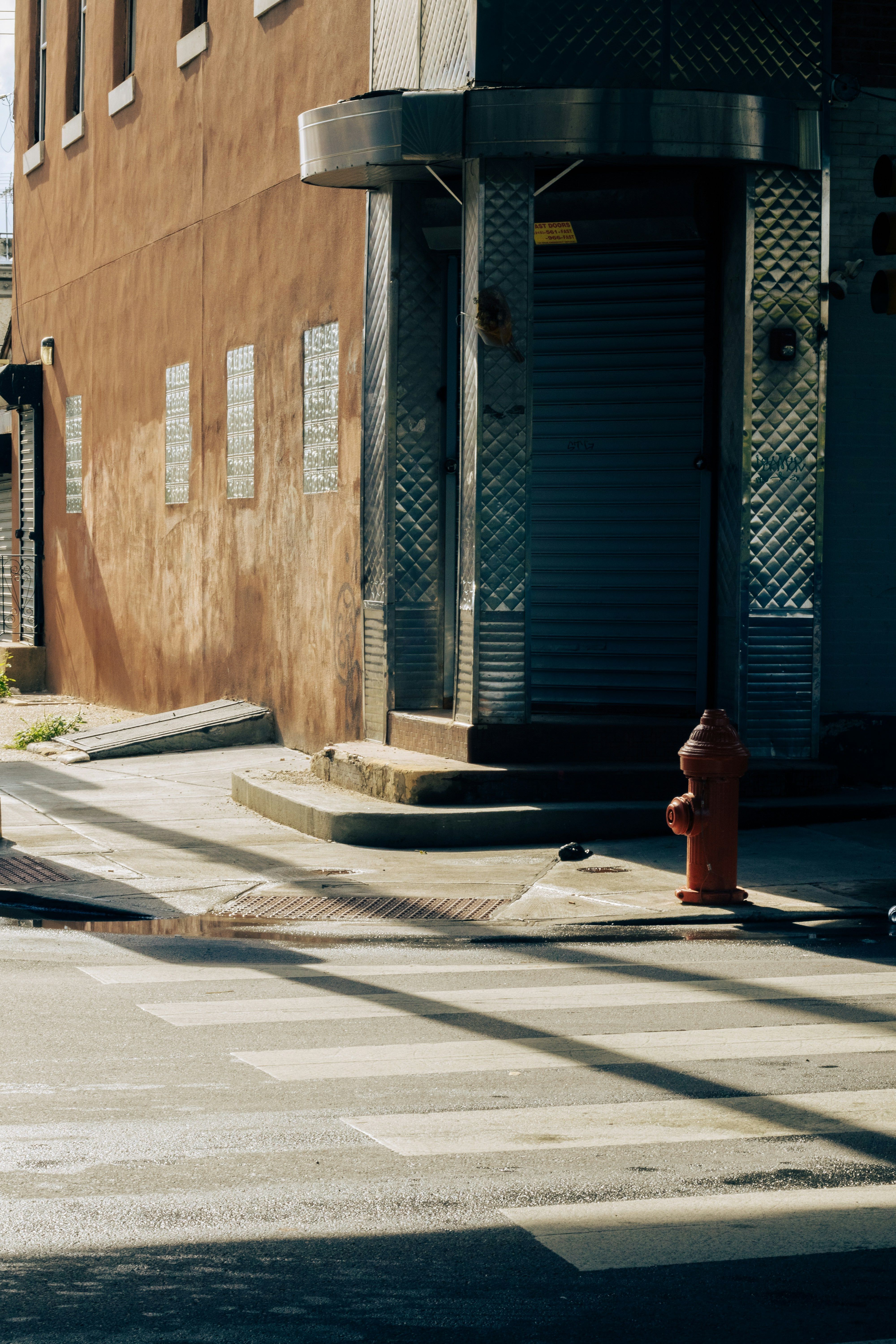
One evening in the early 1970s a man named Michael Pachovas and a few friends wheeled themselves to a curb in Berkeley, California, poured cement into a rough sloped form, and left. Nobody had asked them to and nobody had approved it, but the ramp worked well enough to make a point the city could not keep ignoring.
The story comes from Angela Glover Blackwell's essay in the Stanford Social Innovation Review, and the detail that stuck with me is what getting around actually looked like before those ramps existed. Students who used wheelchairs at UC Berkeley planned their class schedules around which building happened to sit downhill from the last one, and crossing a street often meant rolling down a driveway in an alley, traveling in the road alongside traffic, and hoping to find another driveway before a truck pulled out of a loading dock.
Berkeley installed its first official curb cut on Telegraph Avenue in 1972, which one local advocate later called "the slab of concrete heard 'round the world." Hundreds followed, then hundreds of thousands, and by 1990 the Americans with Disabilities Act had made them standard nationwide.
The part nobody planned for is that everyone started using them. Parents pushing strollers went out of their way to find a curb cut, and so did delivery workers with hand trucks, travelers pulling luggage, kids on skateboards, and anyone carrying groceries in both arms. Blackwell cites a study at a Florida shopping mall that found nine out of ten pedestrians who had nothing to carry and no mobility limitation still walked over to the curb cut rather than step off the curb.
She calls this the curb cut effect, and the shorthand version is that when you build for the people facing the hardest version of a problem, you tend to make things easier for everybody else in the process.
We see a smaller version of it in houses all the time.
What people call about, and what they end up with
Accessibility projects almost always start with a specific event. Someone is coming home from a hip replacement in nine days, or a parent has fallen in the bathroom, or a diagnosis has changed what the next few years are going to look like. The call is usually urgent and narrow, and it sounds like we need a grab bar, or we need to do something about the front steps before Thursday.
What tends to happen afterward is that the change stops belonging to the person it was built for.
A zero step entry gets installed for a walker, and within a month it is the door everyone uses for groceries, furniture deliveries, and strollers, mostly because nobody has to think about the threshold anymore. A curbless shower goes in because stepping over a tub wall stopped being safe, and it turns out to be easier to clean, easier to bathe a toddler in, and considerably harder to date than the builder grade tub surround it replaced. Lever handles replace round knobs for arthritic hands and then get used by everyone with wet hands or full arms. A doorway framed wide enough for a wheelchair is also wide enough for the couch on moving day. Brighter lighting on the stairs goes in for low vision, and afterward nobody in the house is feeling along the wall at two in the morning.
Grab bars are the clearest case. They get mounted because somebody is unsteady after surgery, and then they get grabbed by whoever happens to be climbing out of a slick tub, which over a long enough stretch is every person who lives there.
The part people actually hesitate over
In our experience the hesitation is rarely about cost. It is about what the change announces.
People worry that a grab bar turns a bathroom into a hospital room, or that a ramp at the front of the house tells the neighbors something the family has not finished telling itself. That worry is reasonable and it deserves a real answer rather than a brochure.
Practically speaking, the work does not look the way it did fifteen years ago. Grab bars come in the same finishes as everything else in the room and read as towel bars to anyone who is not specifically looking for one. Ramps can be built in wood or stone to match an existing entry instead of being bolted on in aluminum. Curbless showers are simply what a nicer bathroom looks like now, regardless of who is showering in it. Most of what we install ends up reading as part of the house.
There is also the question of what happens if nothing changes, and a fall that ends in a hospital stay is more expensive than the modification would have been, in money and in independence and in how much the rest of the family has to rearrange around it.
Doing it before you need it
The best version of this work happens well before the emergency, which is also the cheapest version by a wide margin. If a bathroom is already being renovated, blocking the walls for grab bars you might want later takes about an hour and costs almost nothing. Choosing a curbless pan over a tub surround is free at the moment you are already choosing between them. Framing a doorway two inches wider while the wall is open is a decision rather than a project. Wait until after the fall and every one of those turns into demolition.
Berkeley was not trying to help parents with strollers. It was solving one group's problem as directly as it could, and the benefit spread outward on its own. Houses behave the same way, which is why the question worth asking is not whether anyone in the house needs accessible features yet, but what the house would look like if it worked for whoever is having the hardest time in it.
The curb cut history and research in this article come from Angela Glover Blackwell's essay "The Curb-Cut Effect," published in the Stanford Social Innovation Review, Winter 2017. It is worth reading in full: https://ssir.org/articles/entry/the_curb_cut_effect

.jpg)
.jpg)
